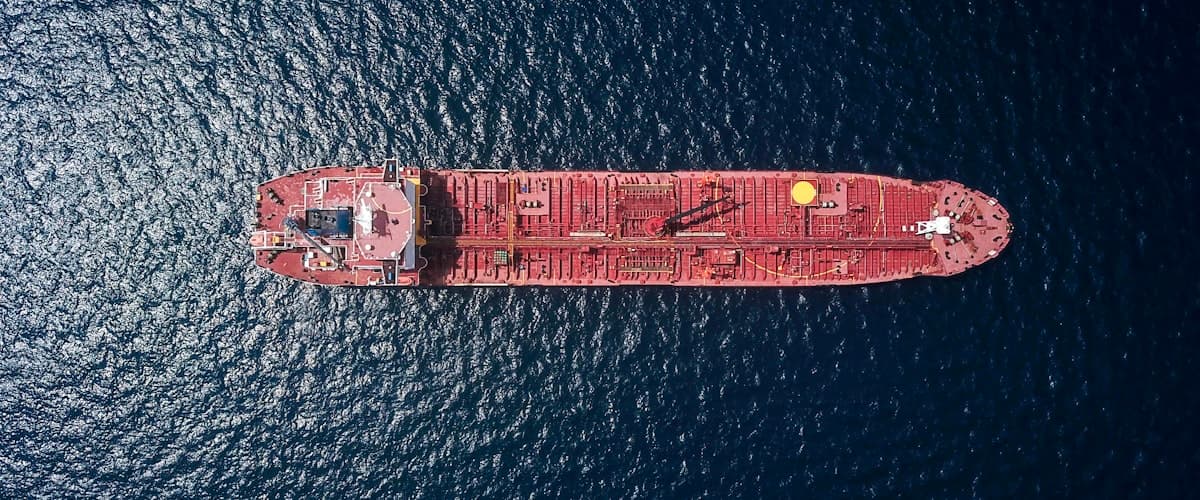
Iran & the Strait of Hormuz
The strategic chokepoint through which ~20% of global oil passes — and Iran's ability to close it.
Current Situation
Last updated: October 03, 2026
Diplomatic efforts collapsed this week after President Trump rejected Iran's seven-day roadmap to reopen the Strait of Hormuz and restart nuclear talks. While Qatari mediators produced a formal US counter-proposal, Doha reports no movement from either side, and the plan requires significant changes. Tehran has publicly ruled out direct negotiations, and Iranian lawmakers are now openly advocating for a nuclear deterrent. The US has further tightened the economic vice via new sanctions on rail and automobile conglomerates, coinciding with a record low for the rial (over 2.5 million per dollar) and zero Iranian crude loadings in September.
Military escalation is accelerating as the US prepares for potential bombing raids after the November midterms. Washington is deploying a third aircraft carrier, the USS Theodore Roosevelt, along with an additional Marine division and seven additional warships carrying at least 9,000 troops. On the ground, the final US forces exited Iraq by September 30, a move Tehran celebrated as a victory. However, kinetic risks remain acute; the IRGC seized a US Navy REMUS 600-class underwater drone for reverse engineering and vowed "more lethal" responses following the death of an IRGC member.
Investment implications are driven by a decoupling of commercial flow and military risk. US-escorted transits have restored crude flows to nearly 13 million barrels a day and pushed September LNG shipments to their highest level since the war began, yet this stability is fragile. Brent surged to $106.92 and WTI to $94.49 following the diplomatic deadlock, and a US-escorted tanker was struck by an unknown projectile this week. The market is now pricing in a period of heightened volatility as the US blockade persists and the military footprint expands.
Key variable to watch: Whether the US resumes bombing strikes after the November midterm elections.
Background
Origins
The Strait of Hormuz is a narrow waterway — at its narrowest point just 33 kilometres wide — that separates Iran from the Arabian Peninsula and connects the Persian Gulf to the Gulf of Oman and the broader Indian Ocean. It is the world's most strategically critical energy chokepoint. Roughly 20% of global oil supply and 20% of liquefied natural gas passes through it daily, amounting to approximately 17–20 million barrels of crude and refined product per day. There is no viable alternative route for the Gulf producers — Saudi Arabia, Iraq, Kuwait, the UAE, and Qatar — to bring their exports to market at scale.
Iran's leverage over the strait is a product of geography and military doctrine. The IRGC (Islamic Revolutionary Guard Corps) Navy operates from a network of coastal bases, underground missile sites, and island fortifications along the Iranian side of the strait. Tehran has developed a doctrine of "asymmetric warfare" specifically designed to threaten larger conventional naval forces: fast attack boats, anti-ship missiles, sea mines, drones, and suicide vessels. The doctrine does not require Iran to win a conventional naval battle — it only requires Iran to make transit sufficiently dangerous that insurance costs spike and tanker captains divert.
The tension between Iran and the West over the strait is inseparable from the broader conflict over Iran's nuclear programme and its regional proxy network. Since the 1979 Islamic Revolution, Iran has used the strait as a geopolitical instrument — threatening closure during the Iran-Iraq War (1980–88), harassing tankers during the "Tanker War" of 1984–88, seizing vessels during periods of sanctions pressure, and mining the strait as a coercive tool. The pattern is consistent: every time the US or its allies tighten economic pressure on Iran, the IRGC Navy escalates in the strait as a counter-lever.
Key Actors
Iran / IRGC Navy: The Islamic Revolutionary Guard Corps Navy — separate from the regular Iranian Navy — is the primary actor in the strait. It operates independently of conventional military command and reports directly to Supreme Leader Khamenei. The IRGC Navy's doctrine prioritises asymmetric harassment: drone swarms, fast boat attacks, mine-laying, and seizure of tankers. It has the capability to close the strait to commercial traffic for weeks, though sustaining a full closure against US Navy response would be extremely difficult.
Supreme Leader Ali Khamenei: The ultimate decision-maker on all matters relating to the strait and nuclear negotiations. Khamenei has consistently used the strait threat as a bargaining chip while avoiding actions that would invite a direct US military response that could threaten the regime itself. The calculated use of escalation and de-escalation is a deliberate regime survival strategy.
United States Navy / CENTCOM: The US maintains a permanent naval presence in the Gulf through the Fifth Fleet, headquartered in Bahrain. CENTCOM's primary mission in the region is ensuring freedom of navigation through the strait. The US has repeatedly escorted tankers, conducted mine-clearing operations, and engaged IRGC fast boats. However, US rules of engagement require proportionality, and Washington has consistently sought to avoid escalation that could ignite a broader regional war.
Saudi Arabia, UAE, Kuwait, Iraq, Qatar: The Gulf producers are the primary beneficiaries of an open strait and the primary victims of any disruption. Saudi Aramco and ADNOC have invested in pipeline infrastructure to partially bypass the strait (the East-West Pipeline and Habshan-Fujairah pipeline offer partial alternatives), but at nothing close to the volume required for full diversion.
UKMTO (UK Maritime Trade Operations): The UK-run organisation that coordinates voluntary merchant ship reporting in the region. UKMTO advisories are the first public signal when incidents occur and are closely watched by shipping markets.
Houthi Movement (Yemen): Technically separate from Iran's direct Hormuz strategy, but relevant — the Houthis control the Bab el-Mandeb strait at the other end of the Arabian Sea and have demonstrated the capacity to attack shipping with drones and missiles, extending the geographic risk zone Iran can threaten by proxy.
Historical Context
1984–88 — Tanker War: During the Iran-Iraq War, both sides attacked tankers supplying their enemy. Iran mined the strait and attacked Kuwaiti tankers. The US re-flagged Kuwaiti tankers under US colours and escorted them — Operation Earnest Will. This was the largest US naval convoy operation since World War II. Iran was eventually deterred after the US sank several IRGC vessels in Operation Praying Mantis (1988), the largest US naval surface engagement since WWII.
2011–12 — Sanctions Escalation: As the Obama administration tightened sanctions over Iran's nuclear programme, Iran repeatedly threatened to close the strait. Oil prices spiked 10–15% on each threat. Iran conducted naval exercises in the strait ("Great Prophet 6") and published maps showing its ability to blockade Hormuz. The US responded by deploying two carrier strike groups. Iran ultimately did not close the strait — the threat alone accomplished the geopolitical objective of raising global oil prices and demonstrating leverage.
2019 — Tanker Seizures: Following Trump's withdrawal from the JCPOA nuclear deal and the reimposition of maximum-pressure sanctions, Iran resumed tanker seizures. In May 2019, four tankers were attacked near Fujairah. In June, two tankers (one Japanese, one Norwegian) were attacked with limpet mines in the Gulf of Oman. Iran seized British tanker Stena Impero in July. The UK responded by deploying HMS Duncan to escort British-flagged vessels.
2020 — Soleimani Assassination: The US killing of IRGC Quds Force commander Qasem Soleimani in January 2020 triggered Iran's largest military response — a ballistic missile strike on US forces at Al-Asad Air Base in Iraq. Iran also threatened to "make the enemy regret" the killing, raising fears of strait escalation. The crisis de-escalated after Iran's attack caused no US fatalities, though the threat environment remained elevated.
2023–24 — Gaza Conflict Spillover: The October 7 Hamas attack and subsequent Israeli military campaign in Gaza activated Iran's regional proxy network. Hezbollah opened a second front in southern Lebanon; the Houthis began attacking shipping in the Red Sea; and IRGC-backed groups attacked US forces in Iraq and Syria. Iran and Israel exchanged direct strikes for the first time in April 2024 — a significant escalation of the shadow war into open conflict. The strait itself was not closed, but the broader regional threat environment intensified substantially.
Market Exposure
Oil: The most direct exposure. A credible Hormuz disruption immediately reprices Brent and WTI to reflect a risk premium. Historical episodes suggest a sustained disruption could push Brent above $120–150/bbl. The relationship is non-linear: markets reprice quickly on escalation signals and reprice slowly on de-escalation. Energy majors (XOM, CVX, Shell, BP, TotalEnergies) and E&P companies benefit from the oil price spike; airline stocks, consumer discretionary, and transportation are hurt.
Shipping and Insurance: Tanker rates spike immediately on any incident. War risk insurance premiums — which add to the cost of every barrel passing through — are the most sensitive real-time indicator of market stress. The Baltic Exchange Dirty Tanker Index is the key data point to watch. Tanker companies (STNG, DHT, FRO) benefit from the rate spike.
LNG: Qatar is the world's largest LNG exporter, and all of its product flows through the strait. Any disruption hits European and Asian natural gas markets directly. TTF (European gas benchmark) is the key exposure. A 30-day disruption of Qatari LNG flows would be severe for European energy security given current storage levels.
Defence: Escalation in the strait is consistently positive for US, European, and Israeli defence names. Lockheed Martin, Raytheon, BAE Systems, and Rheinmetall all move on Hormuz events.
Gold: Classic safe-haven bid on any strait escalation. Gold typically moves $30–60/oz on a significant incident and retains the premium longer than oil if the situation remains unresolved.